
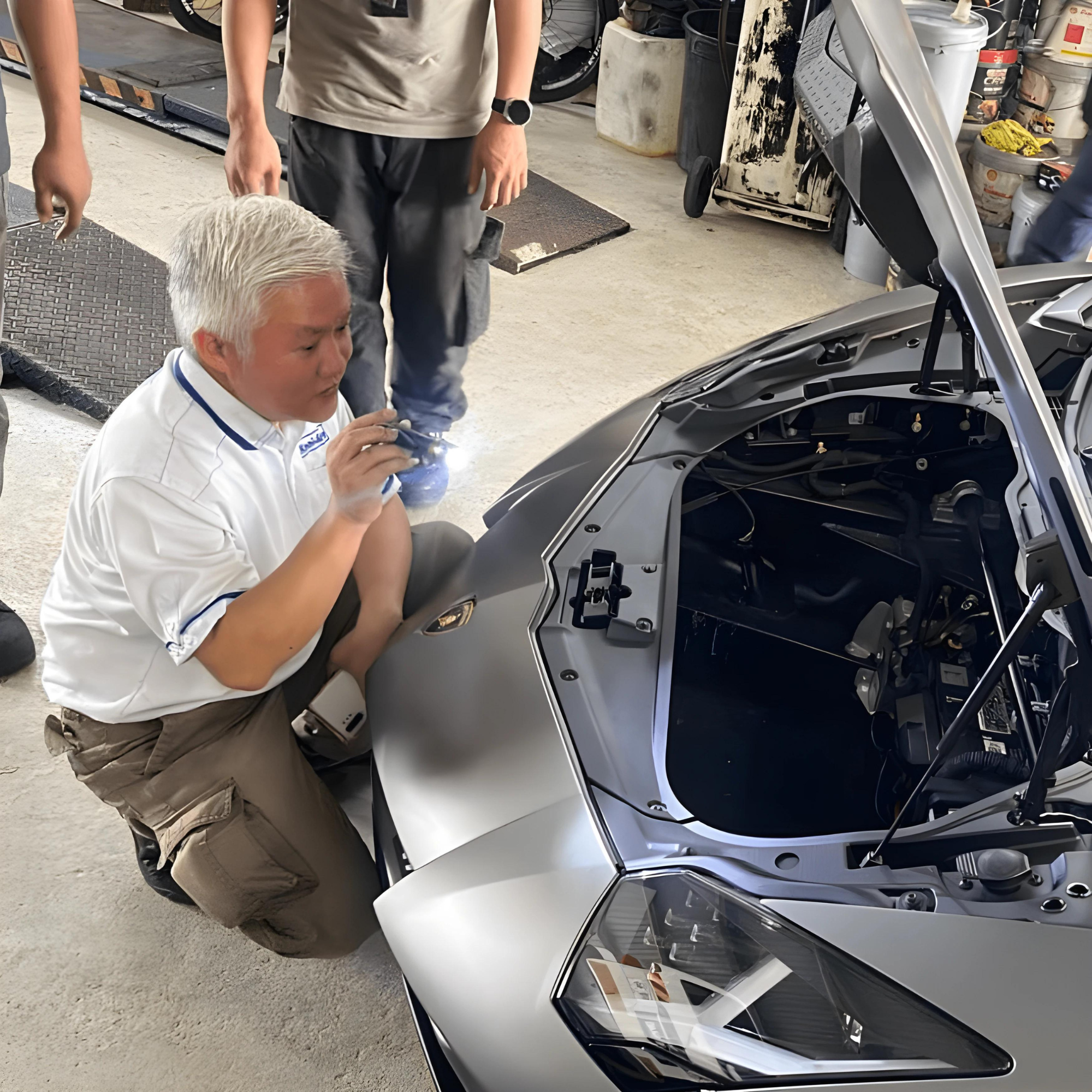
A car aircond system works as a connected circuit. Airflow, temperature control, refrigerant pressure, electrical control and mechanical components can all affect what you feel at the vents.
This guide is general education. It cannot diagnose an individual vehicle, confirm a failed part or provide a repair price.
Begin with observations you can describe
You do not need technical terms. Useful details include when the problem started, whether cooling changes while driving, whether airflow is strong, and whether you notice noise, smell or moisture.
- Is the air never cold, or only less cold than before?
- Does cooling change when the car is moving or stationary?
- Is airflow weak even at a high fan setting?
- Did the problem appear suddenly or gradually?
One symptom can have several possible causes
Weak cooling may relate to refrigerant condition, airflow restriction, a leak, electrical control, sensors, fans, compressor operation or other parts of the system. That is why naming a part from the symptom alone can be misleading.
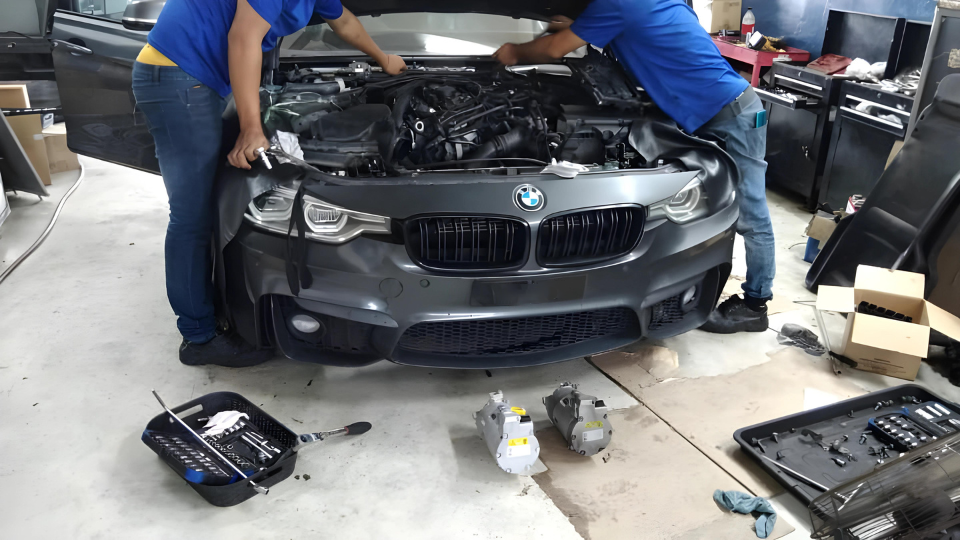
Why a gas refill is not always the complete answer
Refrigerant is intended to circulate within a closed system. If the level is low, an inspection may need to consider why. Refilling without understanding the condition can hide the symptom temporarily while leaving the cause unresolved.
A proper inspection turns symptoms into a decision
The purpose of inspection is to narrow down the issue, explain the findings and discuss suitable options. At Kool-Aire, price and repair details are communicated before approved work begins.